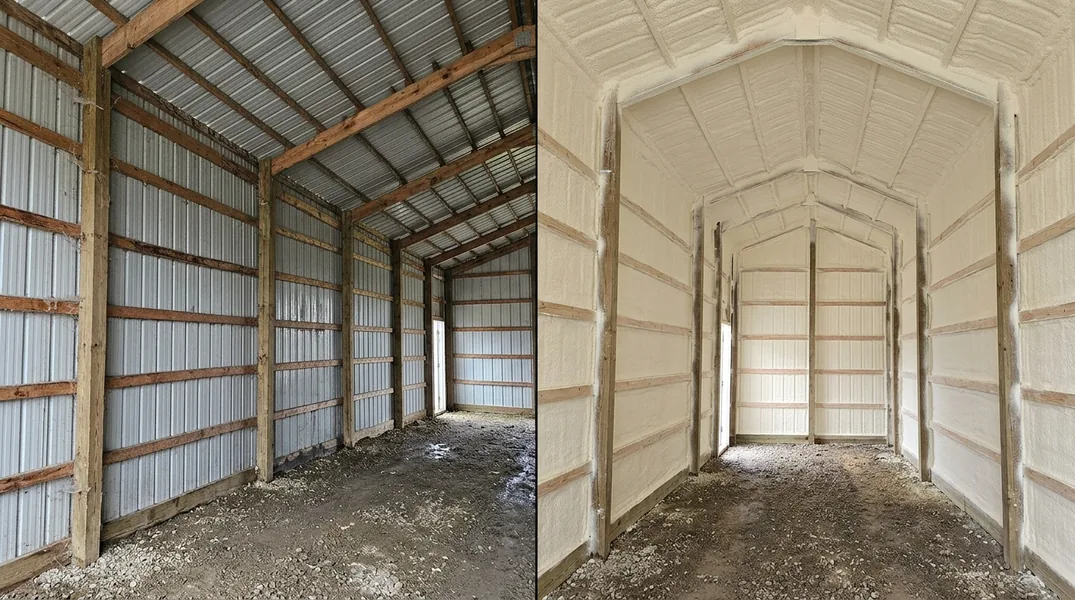
Is Spray Foam Insulation Worth It? The Real Story for Cleveland Homeowners
When homeowners in Cleveland start researching insulation upgrades, spray foam often comes up as a modern solution. The question isn't whether spray foam exists or works, but whether it makes financial and practical sense for your specific home. The answer depends on your priorities, budget, and what you're trying to achieve with your insulation project.
Spray foam insulation has grown in popularity over the past two decades, and for good reasons. It provides superior air sealing, higher R-values per inch than traditional fiberglass, and can last the lifetime of your home. However, it also comes with a higher upfront cost and requires professional installation. Before deciding whether spray foam is worth the investment, it's important to understand both the genuine advantages and the legitimate concerns homeowners should consider.
The truth is that spray foam insulation can be an excellent investment for the right application and the right home. The key is making an informed decision based on facts rather than marketing hype or unfounded fears. Let's walk through the real benefits, the actual risks, and help you determine whether Attic Spray Foam Insulation makes sense for your Cleveland home.
Is Spray Foam Insulation Safe? Separating Fact From Fear
Safety concerns about spray foam insulation are perhaps the most common question we hear from homeowners. The short answer is: yes, spray foam insulation is safe when installed properly by qualified professionals and when it's given adequate time to cure. However, understanding what happens during and after installation is crucial to appreciating why safety protocols matter.
During the spray application process, the chemicals used to create the foam can release fumes. This is why professional installers wear protective equipment and why homes should be evacuated during spraying. The curing process typically takes 24 to 48 hours, during which time the foam continues to off-gas at a decreasing rate. Once fully cured, the foam becomes inert and poses no ongoing health risk. The key is ensuring your home is properly ventilated after application and that you follow your installer's recommendations about re-entry timing.
The concern about spray foam off gassing is legitimate, but it's temporary and manageable. Homeowners should not re-enter their homes until the installer confirms the foam has cured sufficiently. Some people experience mild respiratory irritation or headaches if they're exposed to uncured foam fumes, but this is preventable through proper ventilation and timing. Once cured, the foam itself doesn't release harmful chemicals. If you have respiratory sensitivities or chemical sensitivities, discuss this with your installer before the project begins so they can take extra precautions.
Spray Foam Insulation Pros and Cons: A Balanced Look
Understanding the advantages and disadvantages of spray foam helps you make a decision aligned with your home's needs and your budget. The benefits are substantial, but they come with trade-offs that aren't right for every homeowner or every application.
The major advantages include superior air sealing that eliminates drafts and reduces energy loss, higher R-values per inch than fiberglass or cellulose, moisture resistance that helps prevent mold growth, and the ability to reach irregular spaces and gaps that traditional insulation can't fill. For homes in Cleveland with older construction or complex roof lines, this air-sealing capability is particularly valuable. Spray foam also doesn't settle over time like loose-fill insulation does, so your R-value stays consistent for decades. Many homeowners report noticeably lower heating and cooling bills after spray foam installation, and the energy savings often help offset the initial investment over time.
The legitimate drawbacks are worth considering carefully. First, spray foam costs significantly more than traditional insulation options. Depending on the type and application, you can expect to pay two to four times more than fiberglass batts. Second, installation requires certified professionals with specialized equipment, so you can't do this as a DIY project. Third, if spray foam is installed incorrectly, it can trap moisture or create ventilation problems, leading to mold or structural issues. Finally, if you ever need to make changes to your attic or walls, removing spray foam is difficult and expensive. These are real considerations that should factor into your decision.
Spray Foam Insulation Problems: What Can Go Wrong and How to Avoid Them
Honest conversations about spray foam insulation problems are essential for homeowners considering this investment. Most issues stem from poor installation practices, inadequate ventilation planning, or mismatched product selection for the application. Understanding these potential problems helps you avoid them through careful contractor selection and clear communication about your home's specific needs.
One common problem occurs when spray foam is installed in attics without adequate ventilation planning. If the foam blocks soffit vents or creates an unintended vapor barrier, moisture can become trapped in the attic space, leading to mold growth and wood rot. This is why professional installers must understand your attic's ventilation system before applying foam. Another issue happens when the wrong type of foam is chosen for the application. Closed Cell Spray Foam Insulation is more expensive but provides superior air sealing and moisture resistance, while Open Cell Spray Foam Insulation is more affordable but requires proper drying and ventilation. Using open-cell foam in a damp environment or closed-cell foam in a situation requiring vapor permeability can create problems.
Over-application of foam can also cause issues. When foam is sprayed too thickly or in layers without proper curing between applications, it can become unstable or create pressure on walls and ceilings. Additionally, poor-quality materials or inexperienced installers may leave gaps, apply foam unevenly, or fail to achieve proper density, resulting in reduced performance. This is why choosing an established, reputable contractor is so important. The best way to avoid spray foam insulation problems is to work with certified professionals who understand your home's specific conditions and follow industry best practices throughout the installation process.
Attic Spray Foam Insulation Cost in Cleveland: What to Budget
Cost is often the deciding factor for homeowners considering spray foam insulation. Understanding what you're paying for and how pricing typically breaks down helps you evaluate whether the investment aligns with your financial situation and long-term goals.
Spray foam insulation generally costs between $1.50 and $3.50 per board foot for open-cell foam, and between $3.00 and $6.00 per board foot for closed-cell foam. For a typical 1,200-square-foot attic, you might expect costs ranging from $3,000 to $8,000 or more, depending on the foam type, your attic's complexity, and local market rates. These prices are significantly higher than fiberglass batts, which might cost $1,000 to $2,000 for the same space, but the performance difference and longevity are substantial. Many homeowners recoup their investment through energy savings within 5 to 10 years, and the foam will continue performing for 30+ years after that.
The value proposition improves further when you consider what you're getting. Spray foam provides complete air sealing, eliminates thermal bridging, prevents moisture problems, and requires no maintenance or replacement. Fiberglass batts settle, compress, and lose effectiveness over time, often requiring supplemental air sealing measures. When you factor in energy savings, avoided future repairs, improved comfort, and the lifespan of the product, spray foam becomes more competitive financially than the upfront cost alone suggests. To understand the specific pricing for your home and situation, reach out to Cleveland Spray Foam Insulation for a detailed assessment and free estimate.
Making Your Decision: Is Spray Foam Right for Your Cleveland Home?
After reviewing the safety facts, pros and cons, and cost considerations, you're better positioned to decide whether spray foam insulation is right for your home. The answer depends on several factors specific to your situation. If your home has an older, drafty attic with air leakage problems, high heating and cooling bills, or complex roof geometry, spray foam is likely to deliver significant benefits. If you're planning to stay in your home long-term and want to maximize comfort and energy efficiency, the upfront investment becomes more attractive.
Conversely, if you're on a tight budget and your insulation problems are primarily about R-value rather than air leakage, traditional insulation might be a more practical choice. If your attic has serious moisture or ventilation issues that need to be addressed first, those must be resolved before spray foam installation. If you're planning to renovate or reconfigure your attic in the near future, spray foam's permanence might be a disadvantage.
The best approach is to have a professional evaluation of your specific home. An experienced contractor can assess your attic's current condition, identify where air leakage and heat loss are occurring, and recommend the insulation solution that delivers the best return on investment for your priorities. Whether you choose spray foam or another solution, the important thing is addressing your home's insulation needs. If you'd like a professional assessment and personalized recommendation for your Cleveland home, contact Cleveland Spray Foam Insulation at (216) 465-0804 or request a free estimate today. We'll help you understand your options and make the decision that's right for your home and budget.
Looking for a professional spray foam insulation contractor in Cleveland? Cleveland Spray Foam Insulation responds fast for all your spray foam insulation needs.
Get a Free Quote