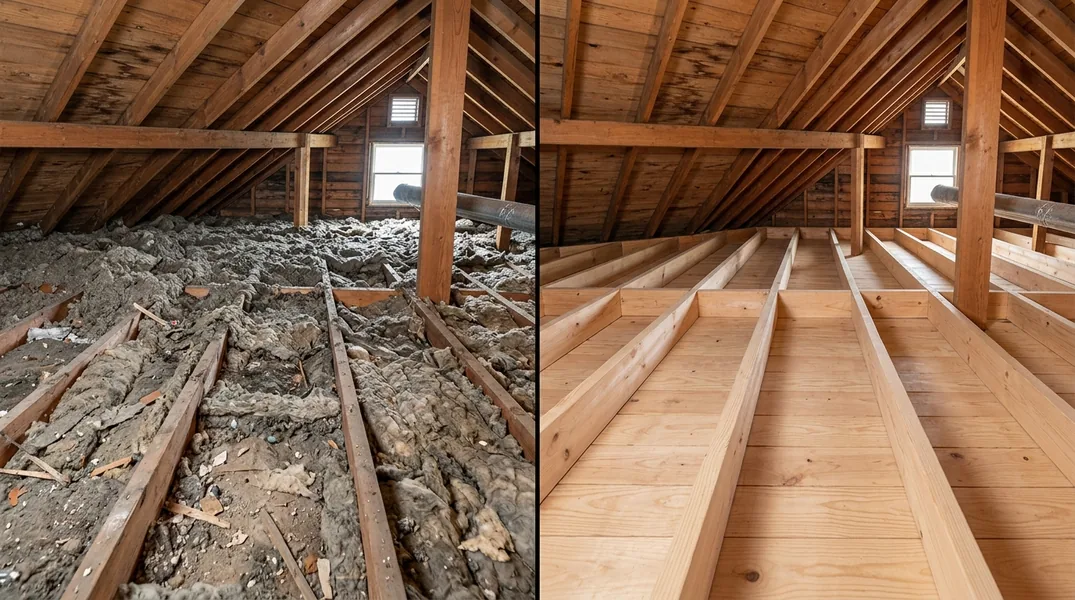
Understanding Spray Foam Insulation: The Basics
When it comes to insulating your home in Cleveland, spray foam has become one of the most effective solutions available. Unlike traditional fiberglass or cellulose insulation, spray foam expands to fill every crack, crevice, and void in your attic, creating an airtight seal that significantly reduces energy loss. But not all spray foam is created equal, and understanding the difference between open-cell and closed-cell varieties is crucial before making an investment in your home.
Spray foam insulation works by being sprayed as a liquid that quickly expands and hardens into a solid material. This expansion is what makes it so effective at sealing gaps that traditional insulation simply cannot reach. However, the cellular structure of the foam determines its performance characteristics, cost, and best applications. For homeowners in Cleveland looking to upgrade their attic insulation, choosing between these two types is one of the most important decisions you'll make.
What Is Open Cell Spray Foam?
Open Cell Spray Foam Insulation has a softer, more flexible structure where the cell walls are not completely closed. Think of it like a sponge with interconnected pores that allow air and moisture to pass through. This unique characteristic makes open-cell foam lighter and more affordable than its closed-cell counterpart, which is why many homeowners consider it first when budgeting for attic insulation projects.
One of the key advantages of open-cell foam is its flexibility and ability to conform perfectly to irregular surfaces. It's also an excellent sound dampener, making it a popular choice for homeowners who want to reduce noise from outside. However, because air can move through the cells, open-cell foam has a lower R-value per inch, typically ranging from 3.5 to 3.6 per inch. This means you'll need a thicker application to achieve the same insulation performance as closed-cell foam. Additionally, open-cell foam is more permeable to moisture, so it requires a vapor barrier in certain applications to prevent moisture infiltration into your attic.
What Is Closed Cell Spray Foam?
Closed Cell Spray Foam Insulation features a denser structure where the cell walls are completely sealed, preventing air and moisture from passing through. This creates a much more rigid foam that provides superior insulation performance and additional structural benefits. The closed-cell structure is what gives this foam its impressive properties and higher price point.
The closed cell spray foam R value typically ranges from 6.0 to 7.0 per inch, which is nearly double that of open-cell foam. This means you need less material to achieve excellent insulation, saving space in your attic while providing superior thermal resistance. Beyond insulation, closed-cell foam also provides moisture resistance, air sealing, and even structural reinforcement to your attic framing. For homeowners in Cleveland dealing with harsh winters and variable humidity levels, these additional benefits can be invaluable for long-term home protection.
Comparing Spray Foam R Value: Which Performs Better?
When comparing open cell spray foam and closed-cell options, the R-value difference is one of the most important factors to understand. R-value measures thermal resistance, and the higher the number, the better the insulation performs. For Cleveland homeowners, achieving adequate R-value is essential because our region experiences significant temperature swings between winter and summer, placing considerable demands on home insulation systems.
Open-cell foam typically delivers an R-value of 3.5 to 3.6 per inch, while closed-cell foam provides 6.0 to 7.0 per inch. To put this in practical terms, if you need an R-38 attic insulation (which is recommended for many Cleveland homes), you would need approximately 10 to 11 inches of open-cell foam or just 6 to 7 inches of closed-cell foam. This thickness difference has real implications for your attic space, ventilation considerations, and overall installation complexity. While open-cell foam can certainly achieve the R-values you need, it requires more material, which affects both the application process and the final cost of your project.
Attic Spray Foam Insulation Cost in Cleveland: What to Budget
Cost is naturally a significant consideration for any home improvement project. Attic Spray Foam Insulation pricing varies based on the type of foam you choose, the size of your attic, and the current insulation situation. Open-cell foam typically costs less per square foot than closed-cell foam, usually ranging from $0.50 to $1.00 per board foot, while closed-cell foam generally costs between $1.00 and $2.00 per board foot. However, because you need less closed-cell foam to achieve the same R-value, the total project cost difference may be smaller than you initially expect.
When evaluating pricing for your specific project, it's important to consider the long-term value rather than just the upfront cost. Closed-cell foam's superior R-value, moisture resistance, and longevity may justify the higher initial investment by reducing your energy bills and protecting your home from moisture-related damage over time. Cleveland Spray Foam Insulation can provide a detailed breakdown of costs for your particular situation. To get an accurate free estimate, call us at (216) 465-0804 or reach out through our website. We'll assess your attic's current condition and help you understand the true cost-benefit of each option.
Which Type Is Right for Your Cleveland Home?
Choosing between open-cell and closed-cell spray foam ultimately depends on your specific needs, budget, and home conditions. Open-cell foam is an excellent choice if you're looking for an affordable insulation upgrade with good sound-dampening properties and don't have significant moisture concerns. It works particularly well in interior applications where moisture control is less critical. If your primary goal is cost-effective energy savings and you're comfortable with the slightly thicker application, open-cell foam can deliver solid results for many Cleveland homeowners.
Closed-cell foam is the superior choice if you want maximum insulation performance in minimal space, need moisture protection, or are dealing with attic conditions that may expose the insulation to water intrusion. It's also the better option if you're planning a long-term stay in your home and want to maximize energy efficiency and protection. For many Cleveland properties, especially older homes with existing moisture issues or those in areas prone to humidity fluctuations, closed-cell foam provides peace of mind and better long-term value. The decision ultimately comes down to balancing your budget against your performance expectations and your home's specific requirements. Cleveland Spray Foam Insulation specializes in helping homeowners make this choice based on their unique situations. Contact us at (216) 465-0804 to discuss which option best suits your home and goals.
Looking for a professional spray foam insulation contractor in Cleveland? Cleveland Spray Foam Insulation responds fast for all your spray foam insulation needs.
Get a Free Quote