Understanding Spray Foam vs Blown-In Insulation
When Cleveland homeowners start researching attic insulation upgrades, they quickly encounter two dominant options: spray foam and blown-in insulation. Both have genuine merit, but they work in fundamentally different ways, and understanding those differences is the first step toward making an honest decision about what your home actually needs.
Attic Spray Foam Insulation expands as it's applied, creating an air-tight seal that fills gaps, cracks, and irregular spaces. Blown-in insulation, by contrast, is loose material (typically fiberglass, cellulose, or mineral wool) that's pneumatically installed into cavities and across flat attic floors. Neither is inherently bad. The right choice depends on your attic's current condition, your budget, and what problem you're actually trying to solve.
Spray Foam vs Fiberglass: The Air-Sealing Advantage
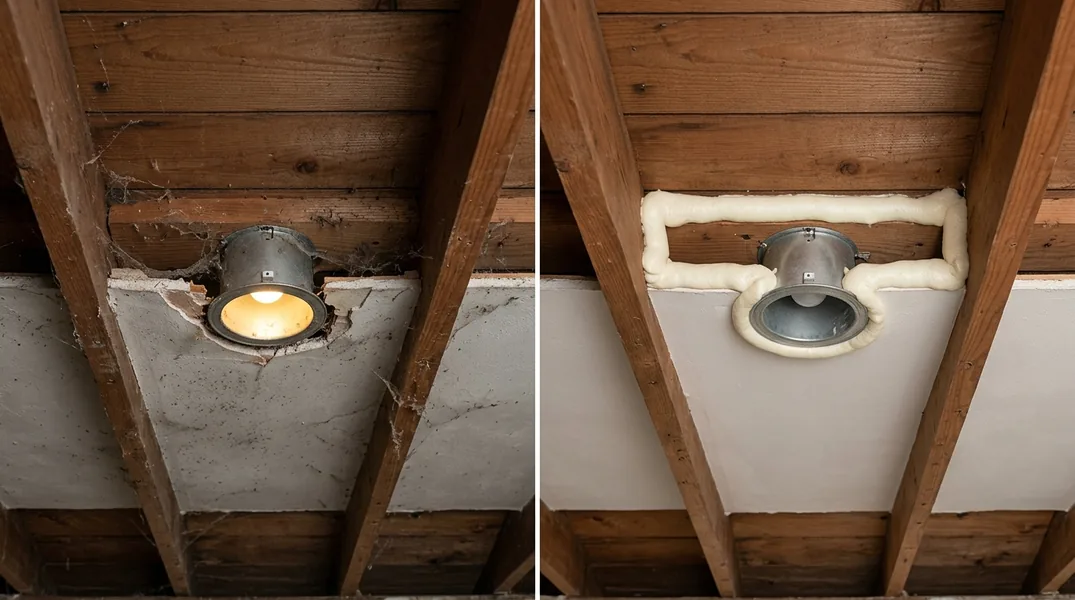
One of the most significant differences between spray foam and fiberglass blown-in insulation is air sealing. Spray foam doesn't just insulate; it seals. When applied, it expands and conforms to every crack, joist space, and penetration in your attic. This air-sealing quality is particularly valuable in older homes throughout Cleveland Heights and surrounding areas, where attic framing is often uneven and gaps are common.
Fiberglass blown-in insulation, while cost-effective, doesn't seal air leaks. You get thermal resistance (the R-value), but air can still move around and through the material. This means you may still experience drafts, moisture issues, or energy loss around ductwork, electrical penetrations, or where walls meet the attic floor. For many homeowners, this distinction is worth understanding before deciding which product is best for your specific attic.
Spray Foam vs Cellulose: Moisture, Settling, and Long-Term Performance
Cellulose is another popular blown-in option, and it deserves honest comparison. Made from recycled paper, cellulose offers good R-value per inch and is environmentally friendly. However, cellulose is hygroscopic, meaning it absorbs and holds moisture. In a humid climate like Cleveland's, where seasonal humidity and attic moisture can be significant, cellulose's moisture sensitivity can be a drawback. Additionally, cellulose settles over time, meaning your R-value decreases gradually after installation.
Closed Cell Spray Foam Insulation has a vapor-retardant quality and doesn't settle or degrade the same way. It maintains its R-value for decades. Open Cell Spray Foam Insulation, while more affordable than closed cell, is more permeable and may not offer the same moisture protection. Understanding these performance differences helps explain why some homeowners choose spray foam for long-term reliability, while others prefer the lower upfront cost of cellulose or fiberglass.
When a Simple Top-Up Is the Honest Answer
Here's where Cleveland Spray Foam Insulation believes in being straightforward: not every attic needs a complete insulation overhaul. If your attic already has adequate insulation coverage (typically R-38 to R-60 depending on your climate zone), adding more blown-in material as a top-up might be exactly what you need. This is especially true if your existing insulation is in good condition and your energy bills are only slightly higher than they should be.
A top-up of blown-in fiberglass or cellulose is significantly cheaper than removing old insulation and installing spray foam throughout. If your attic has settled insulation or thin coverage in certain areas, adding 4 to 6 inches of blown-in material can improve your R-value and energy efficiency for a fraction of the cost. The honest conversation starts with a professional assessment. Many contractors will recommend the most expensive solution because it generates higher revenue, but a truly trustworthy insulation company will tell you whether your attic genuinely needs a complete retrofit or if a targeted upgrade will solve your problem.
Best Insulation for Attic: Factors That Actually Matter
Determining the best insulation for attic installation depends on several real-world factors. First, consider your attic's current state. Is it vented or unvented? Do you have existing insulation, and if so, what type and how much? Are there moisture issues, mold, or active air leaks? Second, think about your budget and timeline. Spray foam costs more upfront but delivers superior air sealing and long-term performance. Blown-in insulation is more affordable and can be installed quickly, making it ideal for budget-conscious homeowners or those seeking a quick efficiency boost.
Third, evaluate your home's age and condition. Older homes with irregular framing, multiple penetrations, and existing air leaks often benefit more from spray foam's air-sealing properties. Newer homes with standard framing and good air barriers might achieve excellent results with blown-in material. Finally, consider your local climate. Cleveland's humid summers and cold winters make moisture control and consistent R-value performance important considerations. This is why some homeowners in the region prefer closed cell spray foam, while others find blown-in solutions perfectly adequate when properly installed.
Attic Spray Foam Insulation Cost in Cleveland: What to Budget
Transparency about cost is essential. Spray foam installation typically runs $1.50 to $3.50 per board foot, depending on whether you choose open cell or closed cell, and whether you're insulating walls, floors, or a combination. For a typical 1,500-square-foot attic, closed cell spray foam might cost $4,500 to $8,000. Blown-in fiberglass usually costs $0.60 to $1.50 per square foot, meaning that same attic might run $900 to $2,250. Cellulose falls somewhere in between.
These figures are rough estimates, and actual pricing depends on your attic's size, accessibility, existing conditions, and local labor rates. The key is understanding what you're paying for. Higher spray foam costs reflect superior air sealing, durability, and long-term performance. Lower blown-in costs reflect faster installation and adequate thermal resistance for many applications. If you're trying to decide between options, call Cleveland Spray Foam Insulation at (216) 465-0804 for a free estimate. A professional assessment will clarify whether the premium for spray foam makes sense for your specific situation or whether a blown-in top-up delivers the value you need.
Making Your Decision: Ask the Right Questions
Before committing to any insulation project, ask your contractor these honest questions. First, what is my attic's current R-value, and what does my climate zone require? Second, do I have air leaks that need sealing, or is my main concern adding thermal resistance? Third, what's my realistic budget, and what return on investment should I expect? Fourth, how long do I plan to stay in this home, and does that timeline support a higher upfront investment in spray foam? Finally, does my attic have any moisture, mold, or ventilation issues that might affect which insulation type I choose?
The honest answer is that spray foam and blown-in insulation are both legitimate solutions. Spray foam excels at air sealing and long-term performance. Blown-in insulation offers affordability and quick installation. Sometimes the best choice is a hybrid approach: spray foam in critical areas like rim joists and around penetrations, combined with blown-in material across the attic floor. Whatever you decide, make sure the recommendation comes from a contractor who genuinely understands your attic's condition and your home's needs, not just from someone trying to sell you the most expensive option available.
Looking for a professional spray foam insulation contractor in Cleveland? Cleveland Spray Foam Insulation responds fast for all your spray foam insulation needs.
Get a Free Quote